
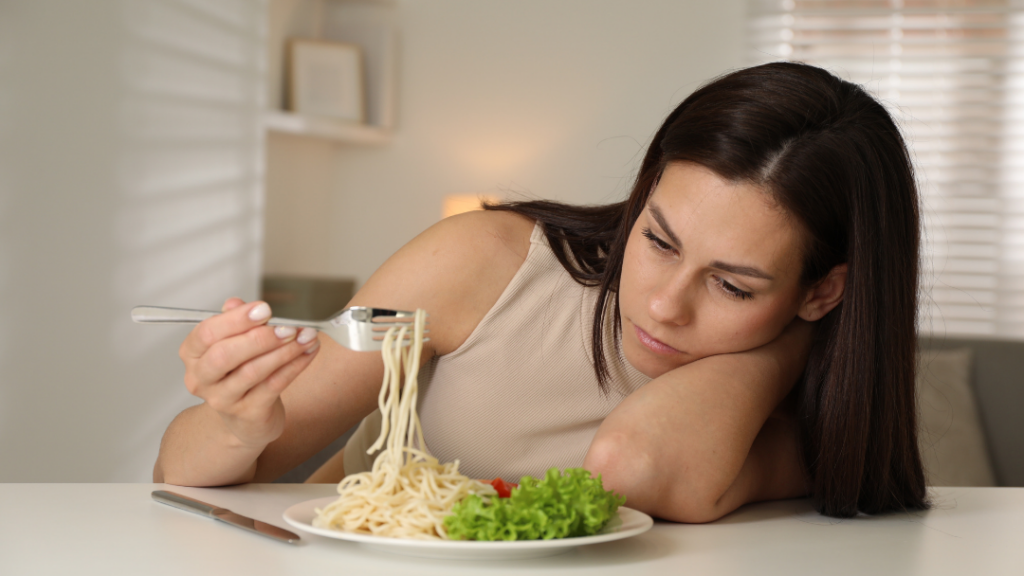
When the Signs Don’t Match the Stereotypes
When many people think of eating disorders, they picture something obvious—dramatic weight changes, visible restriction, or extreme behaviors that are hard to miss. These images are often reinforced by media portrayals and outdated assumptions about who struggles and how.
But in reality, disordered eating is often subtle.
It can exist behind routines that look “healthy,” discipline that is praised, or bodies that don’t match common stereotypes. Because of this, many people struggle quietly for years—unseen, misunderstood, or dismissed.
Understanding what eating disorders really look like requires expanding the conversation beyond appearances and assumptions, and toward emotional experience, mental patterns, and relationship with food.
Eating Disorders Are Mental Health Conditions—Not Appearance-Based Ones
Eating disorders are complex mental health conditions. While physical symptoms can occur, they are not the defining feature.
At their core, eating disorders are often about:
- Control in moments of emotional overwhelm
- Coping with anxiety, trauma, or uncertainty
- Managing distress through food, movement, or restriction
This is why someone can appear “fine” on the outside while experiencing intense internal distress around eating, body image, or self-worth.
Mental health struggles do not require visible proof to be valid.
Disordered Eating Exists on a Spectrum
Not all disordered eating meets diagnostic criteria for a specific eating disorder—and that does not make it insignificant.
Disordered eating can develop gradually. It may begin with rules, rigidity, or emotional patterns that slowly take up more mental space. Over time, food can shift from nourishment to something charged with guilt, fear, or control.
This spectrum-based understanding helps reduce shame and encourages earlier support—before behaviors become more entrenched or harmful.
Why Eating Disorders Are Often Missed
Disordered eating is frequently overlooked because it does not always disrupt daily functioning in obvious ways. In fact, many individuals continue to work, care for others, and meet expectations while struggling internally.
Eating disorders may go unnoticed because:
- Weight is treated as the primary indicator of health
- Restrictive behaviors are praised as “discipline” or “willpower”
- Diet culture normalizes unhealthy relationships with food
- Emotional distress is hidden behind achievement or productivity
When society rewards control and thinness, it becomes harder to recognize when someone is hurting.
What Disordered Eating Can Look Like in Everyday Life
Rather than dramatic or extreme behaviors, disordered eating often shows up in patterns that feel familiar—or even socially acceptable.
It may look like constant mental preoccupation with food, eating, or body image. Meals may be planned rigidly, avoided entirely, or followed by intense guilt. Eating may feel less about hunger and more about rules, numbers, or compensation.
For some, food becomes a way to manage emotions that feel overwhelming or unsafe to express elsewhere. For others, eating feels disconnected from pleasure or bodily cues altogether.
These experiences can be deeply distressing—even when they are invisible to others.
Disordered Eating Does Not Have a “Look”
One of the most harmful myths about eating disorders is that they only affect people with a certain body type.
In reality, eating disorders affect people of all:
- Body sizes
- Genders
- Ages
- Racial and cultural backgrounds
- Socioeconomic statuses
Many individuals in larger bodies are overlooked or dismissed, even when engaging in dangerous levels of restriction or experiencing significant distress. Others in smaller bodies may receive praise rather than concern.
Health cannot be determined by appearance alone—and neither can suffering.
The Emotional Experience Behind Disordered Eating
While behaviors vary, many people with disordered eating share similar emotional experiences.
There is often a strong internal dialogue around “doing it right” or fearing loss of control. Food choices may feel tied to self-worth or morality. Breaking a rule can trigger shame, anxiety, or self-criticism that lingers far beyond the moment.
Over time, this can lead to emotional exhaustion, isolation, and a sense of being at war with one’s own body.
Disordered eating is rarely about food itself. It is about what food has come to represent emotionally.
Diet Culture’s Role in Normalizing Harm
Diet culture blurs the line between wellness and disordered behavior. It promotes the idea that bodies must be managed, fixed, or earned—and that worth is tied to control.
Because of this, behaviors that may indicate distress are often encouraged:
- Ignoring hunger cues
- Moralizing food choices
- Pushing through exhaustion
- Viewing rest or nourishment as something to “deserve”
When these messages are constant, it becomes difficult to recognize when care has crossed into harm.
Challenging diet culture is not about rejecting health. It is about protecting mental well-being.
Why People Don’t Seek Help
Many individuals delay seeking support because they believe their struggle is not “serious enough.” Others fear being judged, misunderstood, or told to simply eat differently.
Common internal barriers include:
“I don’t look sick.”
“Other people have it worse.”
“I should be able to fix this myself.”
These thoughts are not signs of denial—they are reflections of stigma and misunderstanding around eating disorders.
Support is not reserved for crisis. It is appropriate when distress is present.
Eating Disorders and Intersectionality
Cultural expectations, racial stereotypes, and access to care all influence how eating disorders are recognized and treated.
Some communities may face additional barriers, including:
- Underrepresentation in eating disorder research
- Cultural norms that discourage discussing food or body image
- Mistrust of healthcare systems
- Lack of culturally responsive care
Recognizing these realities helps expand who is seen—and who receives support.
Healing Is Not About “Fixing” the Body
Recovery from disordered eating is not about achieving a certain weight or appearance. It is about restoring trust—both with food and with the body.
Healing often involves:
- Relearning hunger and fullness cues
- Addressing underlying emotional patterns
- Reducing shame and self-judgment
- Developing safer coping strategies
This process is not linear. It unfolds with patience, support, and compassion.
Therapy as a Supportive Option
Therapy can provide a space to explore the emotional roots of disordered eating without judgment or pressure. It is not about forcing change—it is about understanding what the behavior has been doing for you.
Support can look different for everyone. For some, therapy focuses on emotional regulation and body trust. For others, it may involve unpacking trauma, identity, or control.
Seeking support is a sign of self-awareness—not weakness.
Where People Find Strength
For some individuals, healing is supported by reconnecting with personal values, cultural practices, or sources of meaning. For others, care is grounded in therapeutic relationships, education, or community support.
There is no single path to recovery. What matters is that support aligns with the individual—not the stereotype.
Questions for Compassionate Curiosity
If it feels supportive, consider reflecting on:
- How much mental space food and body image take up for me?
- Whether eating feels flexible or rigid?
- How emotions influence my relationship with food?
- What kind of support might feel helpful right now?
These reflections are invitations—not diagnoses.
Conclusion: Seeing What’s Often Hidden
Disordered eating is not always obvious—but it is always worthy of care.
When we move beyond stereotypes and listen more closely to emotional experience, we make space for earlier support, reduced shame, and more compassionate understanding.
You do not have to look a certain way to deserve help. Struggle does not require visibility to be real.
Healing begins when what has been hidden is finally allowed to be seen.
